Clovis Builds a Lighthouse
The Reincarnationist PapersClovis’s lighthouse is the outcome of a retreat that left him alone among the ruins of a defeated volunteer force. After surviving the attack and the departure of the men who had escaped with him, he returned to town under cover of darkness and built the tower from stones taken from the citadel. He describes the work not by its duration but by the effort it demanded: a penance measured by effort, not time.
Defeat and retreat
Clovis recounts the event to Evan while drinking a glass of water carefully, avoiding the layer settled at the bottom. He confirms that Ramsay had been right: the attackers overwhelmed the defenders. Clovis says that eighty of his hundred-man volunteer force were killed in the first minutes. The rest were driven into the citadel, which was then destroyed by cannon fire.
Clovis organized a retreat when only six men remained. They escaped to a well on a hill and camped there for two nights. The other five wanted to return to town to avenge their dead fathers, brothers, and sons. Clovis held them back at first, but by the end of the second night he could no longer persuade them to stay. On the third morning, he awoke alone.
Building the tower
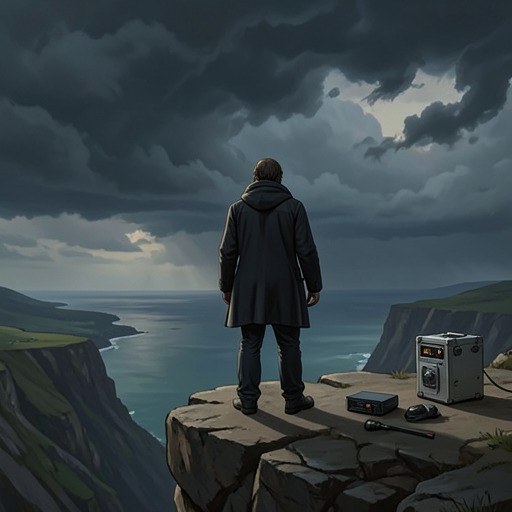
Clovis waited a week, surviving on mollusks and water, then slipped back into town after dark. He stole a British wagon and secretly carried stones from the collapsed citadel to the site, making repeated trips each night until he had gathered enough to build the tower. The lighthouse thus takes its material from the very structure whose destruction forced the retreat: the citadel’s stones become the basis of a new landmark.
Penance and measure
When Evan asks how long the construction took, Clovis does not give a duration. He answers that a penance is measured by effort, not time. The reply frames the lighthouse as more than a practical building project: its significance lies in the sustained labor Clovis undertook after defeat, separation from his companions, and the loss of the men who had not returned from the fighting. The account leaves the tower standing as the physical result of that labor, while making its measure deliberately moral rather than chronological.